Sep 1, 2026Product Guides
What Makes a Good Pet Pee Pad? A B2B Buyer's Guide
Discover what makes a reliable pet pee pad for B2B sourcing, from multi-layer construction and SAP absorption to size, packaging, OEM customization, and key buying considerations.
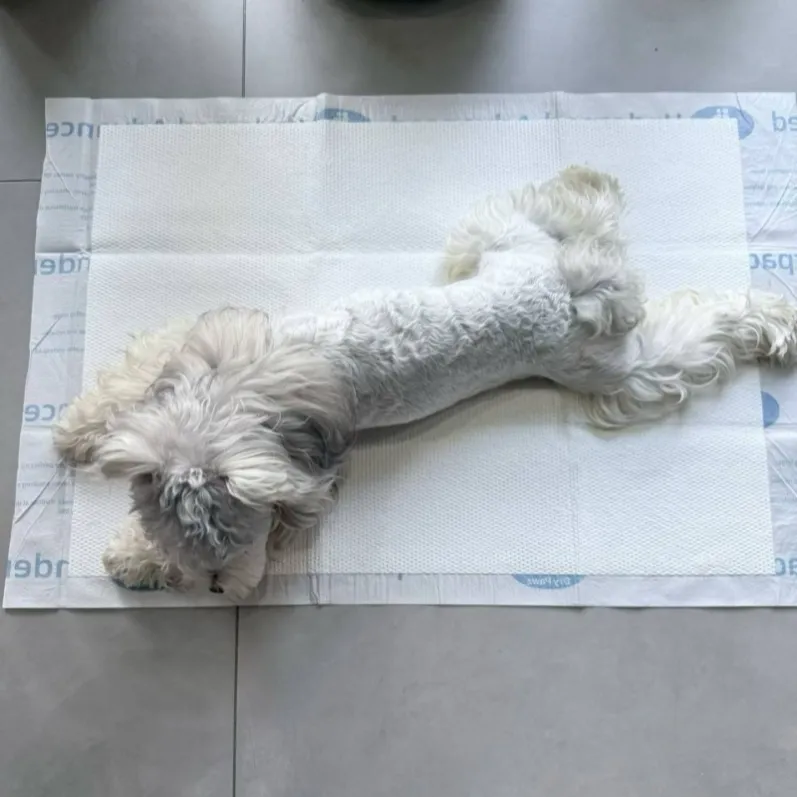
What Makes a Good Pet Pee Pad? A B2B Buyer's Guide
Choosing the right absorbent pet pee pads is about more than comparing prices or pack sizes. For distributors, wholesalers, retailers, and pet care brands, product construction, absorption performance, liquid retention, leakage protection, available sizes, and customization options can all affect product quality and market suitability.
This guide explains the key factors B2B buyers should consider when sourcing pet pee pads and evaluating different product solutions for their target markets.
Key Features B2B Buyers Should Look For
When sourcing pet pee pads, B2B buyers should look beyond appearance and packaging. A reliable product should provide effective liquid absorption and retention, a comfortable surface, and adequate leakage protection.
Understanding these basic performance factors can help buyers compare products more effectively and select specifications that better meet their market requirements.
Fast Absorption and Liquid Locking
A good pet pee pad should absorb liquid efficiently and retain it within the pad. Effective liquid retention is also important for reducing rewetting and helping maintain a drier surface during use.
For B2B buyers, absorption performance should therefore be considered together with the overall construction of the absorbent core.
A Soft and Comfortable Surface
Since the surface of a pet pee pad comes into direct contact with a pet's skin and paws, softness is another important consideration.
A soft nonwoven surface provides a comfortable touch and can help reduce friction during use, making surface material an important factor when evaluating pet pee pads.
Effective Leakage Protection
Absorption alone is not enough if liquid passes through the pad. A suitable bottom layer helps prevent liquid from penetrating through the pad and protects floors and other surrounding surfaces.
For distributors and retailers, reliable leakage protection is an important part of overall product performance and customer satisfaction.
Understanding the Structure of a Pet Pee Pad
A pet pee pad is made up of multiple functional layers, with each layer serving a specific purpose in the absorption and protection process. Understanding the structure can help B2B buyers better evaluate product construction when sourcing pet pee pads.
Soft Nonwoven Surface
The top layer is made of soft nonwoven fabric and comes into direct contact with the pet's skin and paws. It provides a comfortable touch and supports the overall user experience.
Absorbent Tissue Layers
Absorbent tissue layers are positioned around the absorbent core. They help transfer and distribute liquid toward the absorbent core as part of the overall pad construction.
Fluff Pulp + SAP Absorbent Core
The absorbent core combines fluff pulp and SAP (Super Absorbent Polymer). This core is responsible for absorbing and retaining liquid within the pad and plays an important role in overall absorption performance.
Composite Breathable Bottom Film
The bottom layer uses a composite breathable film designed to provide leakage protection by helping prevent liquid from passing through the pad.
How the Layers Work Together
The different layers work as a complete system:
Soft Surface → Liquid Transfer → Absorption & Retention → Leakage Protection
This multi-layer construction combines surface comfort, liquid absorption, liquid retention, and leakage protection in one pet pee pad.
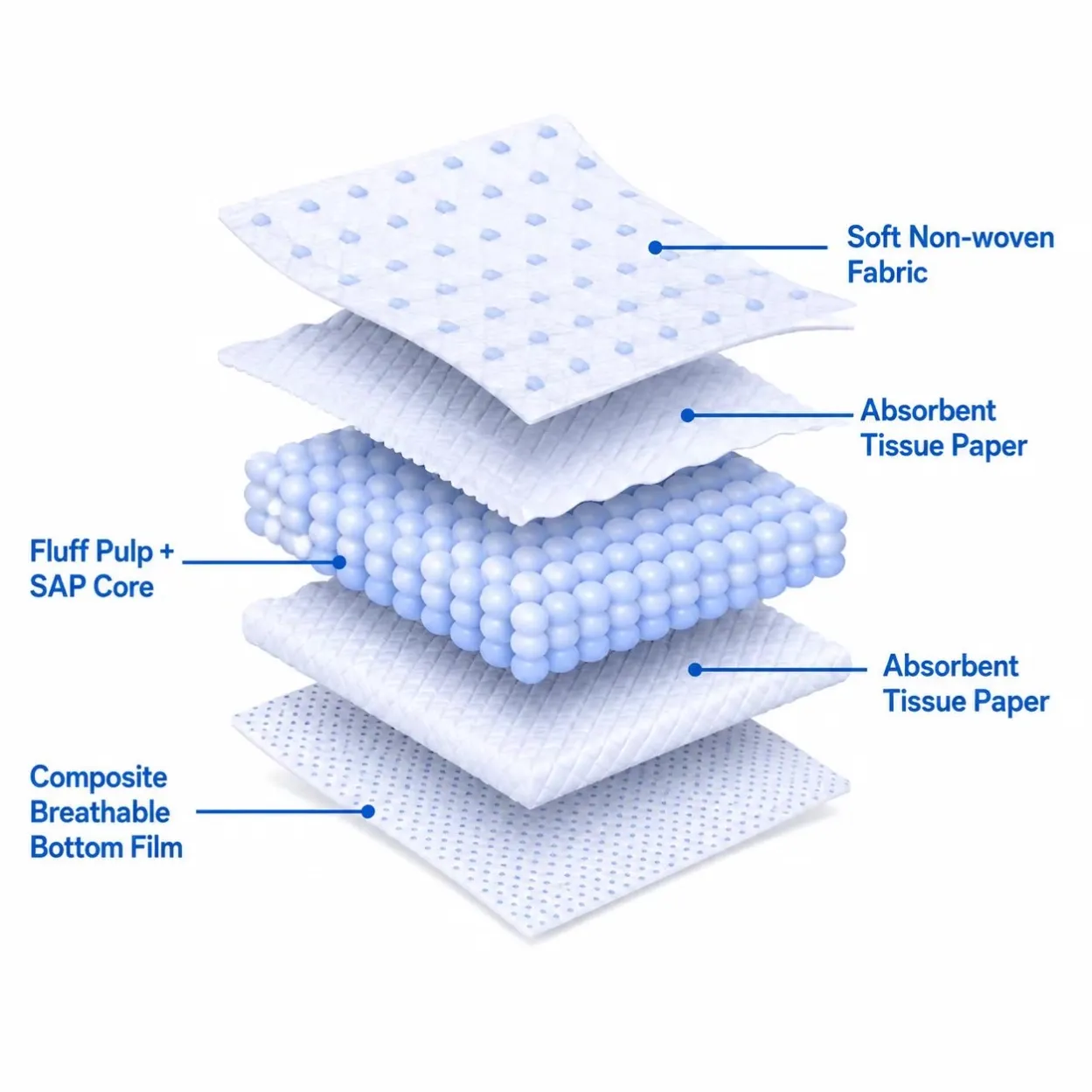
Each layer serves a specific function, working together to support comfort, efficient absorption, liquid retention, and leakage protection.
Why SAP Matters in Pet Pee Pads
SAP, or Super Absorbent Polymer, is an important component of the absorbent core in pet pee pads. Its primary role is to help retain liquid within the absorbent core after absorption.
For B2B buyers, understanding the role of SAP can provide a better basis for evaluating the absorbent core rather than judging a pet pee pad only by its appearance, thickness, or price.
The performance of the absorbent core depends not only on the presence of SAP but also on how SAP works together with fluff pulp within the overall core construction.
How the Absorbent Core Works
Liquid Contact
↓
Absorption
↓
Fluff Pulp + SAP Core
↓
Liquid Retention
↓
Reduced Rewetting
This core structure is an important factor to consider when comparing absorbent pet pee pads for different B2B applications.
Choosing Pet Pee Pads for Different B2B Requirements
Different B2B buyers may have different requirements for pet pee pads depending on their target market, product positioning, packaging strategy, and customization needs.
When sourcing absorbent pet pee pads, buyers should consider more than unit price alone. Product size, pack quantity, packaging, and customization options can all affect the suitability of a product for a specific market.
Size Selection
Different pad sizes provide different coverage areas. The available sizes for this product include:
- 60 × 45 cm
- 60 × 60 cm
- 60 × 90 cm
- 80 × 90 cm
- 80 × 120 cm
- 80 × 145 cm
Offering multiple sizes allows B2B buyers to select suitable specifications according to their target market and customer requirements.
Packaging Requirements
Pack quantity is another consideration when developing or sourcing a pet pee pad product.
Different pack configurations may suit different retail and distribution strategies. Buyers can evaluate the relationship between pack quantity, package size, target price, and market positioning when selecting a suitable configuration.
OEM & Customization
For brands and distributors developing their own pet product lines, customization can be an important consideration.
OEM and ODM services are available for B2B customers looking for customized product solutions, including specific product or packaging requirements.
Choosing the Right Specification
The largest or most absorbent pet pee pad is not necessarily the most suitable option for every market.
B2B buyers should evaluate target market, required coverage, pack quantity, packaging strategy, and customization requirements together when selecting the right specification.
Pet Pee Pad Buying Checklist
Choosing the right pet pee pad requires more than comparing price and pack quantity. B2B buyers should consider product construction, specifications, packaging, and customization requirements before making a sourcing decision.
Factor | What Buyers Should Check |
Absorbent Core | Fluff pulp + SAP structure |
Surface | Softness and liquid absorption |
Leakage Protection | Waterproof bottom layer |
Size | Different application requirements |
Pack Quantity | Retail or bulk requirements |
Packaging | Retail / bulk / private label |
Customization | OEM / ODM availability |
Quality Consistency | Stable performance between batches |
Our Absorbent Pet Pee Pad Solution
For distributors, wholesalers, retailers, and pet care brands, we offer absorbent pet pee pad solutions designed around the key requirements of everyday pet hygiene.
The product features a multi-layer construction combining a soft nonwoven surface, absorbent tissue, a fluff pulp and SAP core, and a composite breathable bottom film.
Multiple size options are available, including 60 × 45 cm, 60 × 60 cm, 60 × 90 cm, 80 × 90 cm, 80 × 120 cm, and 80 × 145 cm, allowing B2B buyers to select suitable specifications for their target markets.
OEM and ODM solutions are also available for customers with specific product, packaging, or private label requirements.
Why Consider This Solution?
- Multi-layer construction for balanced product performance
- Fluff pulp + SAP core for liquid absorption and retention
- Soft nonwoven surface for comfortable contact
- Composite breathable bottom film for leakage protection
- Multiple size options for different market requirements
- OEM & ODM solutions for customized B2B needs
FAQ
1. What materials are used in the absorbent core?
The absorbent core combines fluff pulp and SAP (Super Absorbent Polymer). Together, these materials support liquid absorption and retention within the core.
2. What is the difference between pet pee pads and pet training pads?
“Pet pee pad” generally describes an absorbent pad designed to handle pet urine and protect surrounding surfaces. “Pet training pad” usually emphasizes its use during house-training.
The two terms can overlap depending on the market and how the product is positioned.
3. Are pet pee pads and pet underpads the same product?
The terms can refer to similar absorbent products designed to contain pet urine and protect surrounding surfaces. “Pet pee pads” is commonly used as a product term, while “pet underpads” can be used as a more general or professional product description.
4. What sizes of pet pee pads are available?
The available sizes include 60 × 45 cm, 60 × 60 cm, 60 × 90 cm, 80 × 90 cm, 80 × 120 cm, and 80 × 145 cm.
5. Can pet pee pads be customized for private label brands?
Yes. OEM and ODM solutions are available for B2B customers, depending on product specifications, packaging, and customization requirements.
6. What should B2B buyers consider when sourcing pet pee pads?
Buyers should consider the absorbent core, surface material, leakage protection, pad size, pack quantity, packaging, and customization requirements when evaluating pet pee pads.
Looking for Pet Pee Pads for Your Market?
Whether you are a distributor, wholesaler, retailer, or private label pet brand, we can help you explore suitable absorbent pet pee pad solutions based on your target market, product specifications, packaging, and customization requirements.