How to Improve Your Pet’s Oral Hygiene: A Daily Dental Care Guide for Dogs and Cats
A practical guide to daily oral hygiene for dogs and cats, including warning signs, routine care steps, and how dental water can complement brushing and veterinary checkups.
Why Pet Oral Hygiene Matters
Oral hygiene is an important part of everyday care for both dogs and cats. Food particles, plaque and oral bacteria can build up over time, contributing to unpleasant breath and discomfort. A consistent routine helps pet owners keep the mouth cleaner while making it easier to notice changes that may require professional attention.
This guide explains the foundations of daily pet oral care and how products such as pet dental cleaning water can complement brushing and regular veterinary checkups.
Dental plaque begins as a soft film on the teeth. Without regular cleaning, it can harden and become more difficult to remove. Persistent bad breath, visible buildup and changes in eating behavior may indicate that a pet needs closer oral care.
Routine care can help maintain cleaner teeth and gums, support fresher breath, reduce everyday plaque accumulation and help owners identify unusual changes earlier. Home care supports hygiene, but it does not replace veterinary diagnosis or treatment.
Common Signs That Deserve Attention
Pet owners should regularly look for persistent bad breath, yellow or brown buildup, red or bleeding gums, difficulty chewing, pawing at the mouth, increased drooling or reduced appetite.
If these signs are severe, persistent or associated with pain, a veterinarian should examine the pet. Professional cleaning may be necessary when hardened deposits are already present.
Build a Practical Daily Oral Care Routine
1. Check the Mouth Regularly
Choose a calm time and gently lift the lips to inspect the visible teeth and gum line. Look for redness, buildup, damaged teeth or unusual odor. Short, positive checks are usually easier for pets to accept than long sessions.
2. Introduce Brushing Gradually
Use a toothbrush and toothpaste designed specifically for pets. Human toothpaste should not be used because some ingredients may be unsuitable for animals. Begin by allowing the pet to become familiar with the taste and handling, then increase brushing time gradually.
3. Use Complementary Oral Care Products
For owners who need an additional daily-care option, pet dental cleaning water can complement the routine. Products formulated for dogs and cats may help support oral cleanliness and fresh breath when used according to the product label.
Dental water should be viewed as a supporting step rather than a substitute for brushing or professional care. Always follow the stated directions and provide clean drinking water.
4. Choose Suitable Chews and Toys
Appropriately sized dental chews and textured toys can provide mechanical action during chewing. Choose products suited to the pet’s size and chewing habits, supervise use and avoid items that are excessively hard or easy to swallow.
5. Arrange Veterinary Dental Checks
Regular veterinary examinations help identify problems that may not be visible at home. A veterinarian can recommend an appropriate schedule based on the pet’s age, breed, health and oral condition.
What to Look for in Pet Dental Cleaning Water
When comparing daily oral care products, review whether the formula is clearly intended for the target animal, ingredient and usage information, packaging size, dosing directions, storage requirements, manufacturer documentation and regulatory suitability for the intended market.
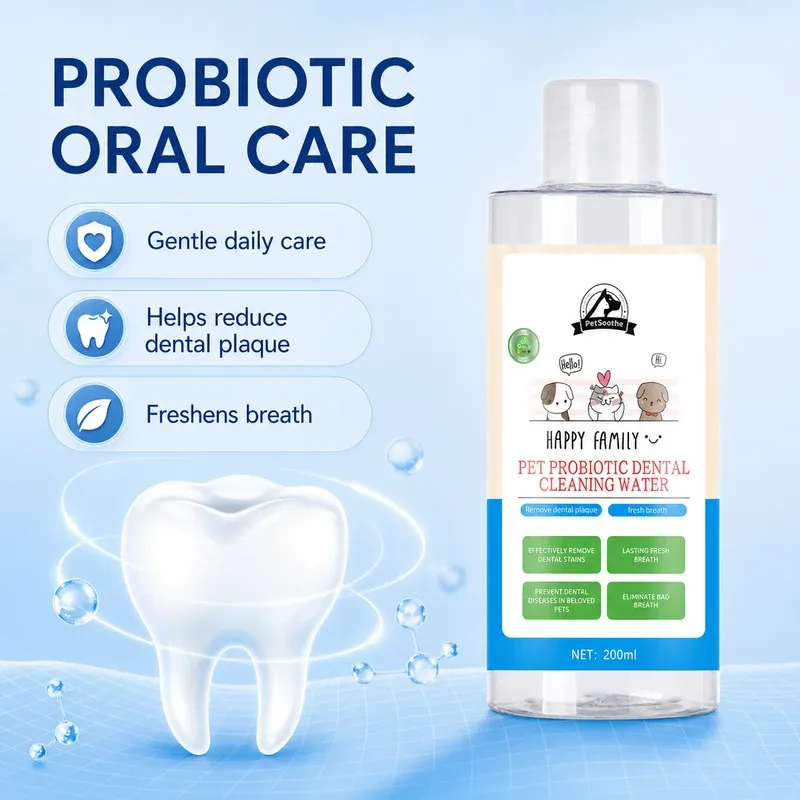
Our 200 ml Pet Probiotic Dental Cleaning Water is designed as a daily oral care option for dogs and cats. Product information identifies lysozyme, green tea extract and a probiotic blend as key ingredients. It is positioned to support routine oral cleanliness and fresher breath when used according to the product label.
Oral Care Tips for Dogs
Many dogs adapt well to gradual tooth brushing, especially when training begins early. Introduce each step slowly, reward calm behavior and focus first on the outer surfaces of the teeth. Select chews and toys that match the dog’s size and chewing strength.
Owners of small breeds and older dogs may need to pay particular attention to buildup and gum condition. Persistent odor, pain or difficulty eating should be discussed with a veterinarian.
Oral Care Tips for Cats
Cats often need shorter and more gradual handling sessions. Begin with gentle contact around the face and lips before introducing a pet toothbrush. Keep each session brief and stop if the cat becomes distressed.
Because cats may hide discomfort, changes in appetite, chewing behavior or grooming can be important warning signs. Professional advice is recommended whenever an oral problem is suspected.
A Simple Weekly Checklist
- Inspect the teeth and gums several times each week.
- Brush as regularly as the pet comfortably allows.
- Use complementary oral care products according to their labels.
- Clean food and water bowls frequently.
- Monitor breath, appetite and chewing behavior.
- Schedule veterinary checks when recommended.
OEM and Private Label Pet Oral Care
For pet care brands, importers and distributors, oral hygiene is a practical category for expanding a daily-care product line. Product positioning should remain clear, evidence-based and appropriate for the target market.
Vetesecare supports OEM and private-label cooperation for pet care products. Packaging, label presentation and product requirements can be discussed according to the buyer’s confirmed market needs. Contact us to discuss pet oral care product development and wholesale cooperation.
Frequently Asked Questions
Can dental cleaning water replace brushing?
No single complementary product should be treated as a complete replacement for brushing and veterinary care. Dental water can form one part of a broader routine when used according to its label.
Can the same oral care product be used for dogs and cats?
Only use a product for the animals stated on its label. The product featured in this guide is positioned for both dogs and cats.
What should I do if my pet has persistent bad breath?
Persistent bad breath may have several causes. A veterinarian should assess the pet, particularly if the odor is accompanied by visible buildup, red gums, pain, drooling or changes in eating.
How often should I check my pet’s mouth?
Brief checks several times each week can help owners notice changes. The exact home-care and veterinary schedule should reflect the individual pet’s needs.
Conclusion
A practical pet oral hygiene routine combines regular observation, gradual brushing, suitable complementary products and professional veterinary care. Consistency matters more than complexity. By making dental care part of everyday pet care, owners can support cleaner mouths, fresher breath and better awareness of oral changes.