Sep 17, 2026Pet Care Insights
Pet Dental Care: What Every Dog and Cat Owner Should Know
Discover why dental care matters for dogs and cats, how to recognize common oral health problems, and how convenient dental products can make everyday pet oral hygiene easier.
Pet Dental Care: What Every Dog and Cat Owner Should Know
For many pet owners, dental care is one of the easiest parts of pet health to overlook. Food bowls are cleaned every day, coats are brushed, and vaccinations are kept up to date—but what about the teeth?
Bad breath is often dismissed as “normal for pets,” while yellow teeth or a small amount of tartar may not seem like a serious concern. In reality, oral hygiene is an important part of everyday pet care.
From dogs that resist tooth brushing to cats that refuse to open their mouths, many pet families struggle to find a dental care routine that is both effective and easy to maintain.
This guide explores the most common pet dental concerns and how modern oral care products can fit into a practical daily routine.
Is Bad Breath Normal for Dogs and Cats?
One of the most common questions from pet owners is simple: Why does my pet have bad breath?
A pet's breath may not always smell pleasant, especially immediately after eating. However, persistent or strong bad breath should not simply be considered a normal part of owning a dog or cat.
One common cause is the buildup of dental plaque.
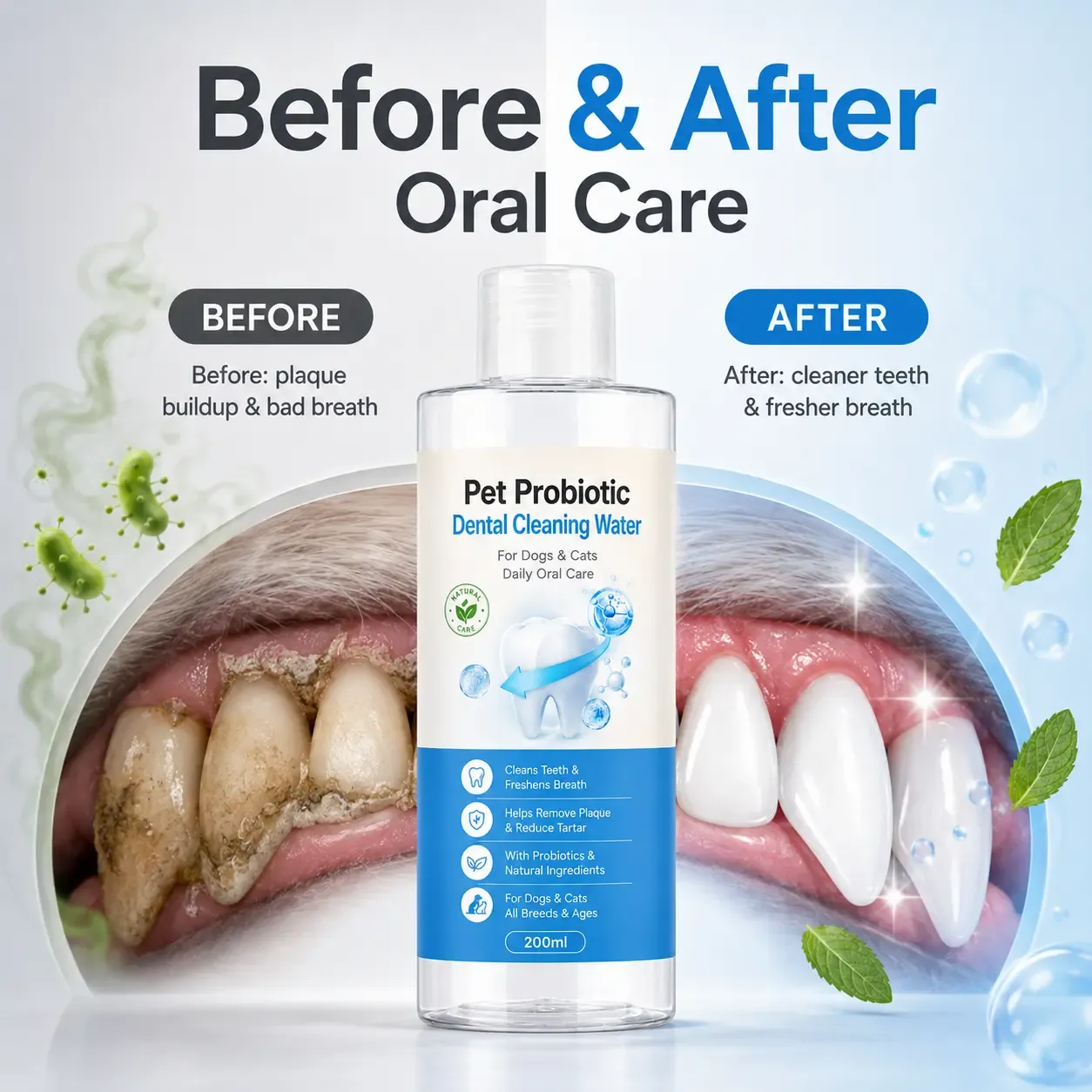
Plaque is a soft film of bacteria that can accumulate on the teeth. If it is not regularly removed, it can harden into tartar. Over time, plaque and tartar can contribute to gum irritation and other oral health problems.
For pet owners, bad breath can therefore be an early reminder that their pet's teeth and gums need more attention.
Why Do Dogs and Cats Develop Plaque and Tartar?
Pets eat every day, and food particles can remain around the teeth and along the gumline.
Bacteria can then accumulate on the surface of the teeth, forming plaque. Without regular mechanical or other appropriate oral care, plaque may become harder and more difficult to remove.
This is why dental care is not only about making a pet's breath smell fresher. It is about maintaining a cleaner oral environment as part of regular hygiene.
Several factors can influence a pet's dental health, including:
- Diet and eating habits
- Age
- Breed and individual characteristics
- Chewing behavior
- Existing oral conditions
- How consistently dental care is provided
Some pets may naturally accumulate plaque and tartar more easily than others.
What Are the Signs of Poor Oral Hygiene in Pets?
Many pet owners do not notice dental problems until the signs become obvious.
Regularly checking your pet's mouth can help you recognize changes earlier.
Common signs that deserve attention include:
- Persistent bad breath
- Yellow or brown buildup on the teeth
- Red or swollen gums
- Excessive drooling
- Chewing differently or more slowly
- Dropping food while eating
- Pawing at the mouth
- Reduced interest in food
- Discomfort when the mouth is touched
These signs do not necessarily indicate the same underlying problem, and persistent or severe symptoms should be evaluated by a veterinarian.
For everyday pet owners, however, the key takeaway is simple: changes in breath, teeth, gums, or eating behavior should not automatically be ignored.
Why Is Dental Care So Difficult for Some Pets?
Knowing that pets need dental care is one thing. Actually getting a dog or cat to cooperate is another.
Many dogs dislike having their mouths handled. Cats can be even more resistant to unfamiliar objects being placed near their teeth.
This creates one of the biggest challenges for modern pet families:
How can owners maintain oral hygiene without turning every dental care session into a struggle?
Traditional tooth brushing can be useful when a pet accepts it, but it is not always easy to establish as a daily habit.
Pet owners may face problems such as:
- Pets refusing a toothbrush
- Pets biting or chewing the brush
- Cats becoming stressed during brushing
- Owners not having enough time for complicated routines
- Difficulty reaching the back teeth
- Pets becoming resistant after unpleasant experiences
Because of these challenges, convenience has become an important consideration when choosing pet oral care products.
Does My Pet Really Need Daily Dental Care?
A common misconception is that dental care is only necessary when visible tartar appears.
In reality, regular oral hygiene is generally easier to maintain than waiting until there is a noticeable buildup.
Daily or frequent dental care can help pet owners stay ahead of everyday plaque accumulation and maintain better oral hygiene.
The exact routine depends on the pet, its health, and the products being used. The most important factor is consistency.
A simple routine that an owner can realistically maintain may be more practical than an ideal routine that the pet refuses to tolerate.
What If My Dog or Cat Hates Tooth Brushing?
This is one of the most important concerns for pet families.
If a pet strongly resists brushing, owners may look for alternative or complementary oral care methods.
Modern pet dental products can include:
Pet Dental Mousse and Dental Gel
Dental mousse and oral gels are designed for owners who want a convenient way to incorporate oral care into their pet's routine.
Depending on the formulation, these products may be designed to support plaque control, fresh breath, or general oral hygiene.
The brushless format can be particularly appealing for pets that do not tolerate traditional tooth brushing.
Dental Wipes
Pet dental wipes can provide another convenient option for cleaning accessible areas of the teeth and gumline.
They can be useful for owners looking for a simple, hands-on addition to their pet's oral care routine.
Dental Treats and Dental Chews
Dental treats and chews are popular because they combine oral care with something pets already enjoy.
Their effectiveness depends heavily on product design, texture, ingredients, chewing behavior, and how the product is used.
They should therefore be viewed as part of a broader dental care routine rather than automatically replacing all other forms of oral hygiene.
Oral Sprays
Oral sprays are another convenient option for pet owners who prioritize speed and ease of application.
They may be particularly attractive for owners who find brushing difficult or who want an additional product for maintaining fresh breath.
Are Dental Treats Enough to Keep My Pet's Teeth Clean?
This is another question frequently asked by pet owners.
Dental treats can be convenient, enjoyable, and useful as part of an oral care routine. However, not every dental treat provides the same level of cleaning.
The texture, shape, size, chewing time, and formulation can all affect the product's intended function.
Pet owners should also consider their pet's size, age, chewing habits, and individual needs when selecting dental treats.
Rather than thinking of one product as a complete replacement for dental care, it is more useful to think in terms of a layered oral hygiene routine.
For example:
Daily oral care + appropriate dental treats + regular veterinary dental checks
This approach allows different products to serve different purposes.
Do Cats Need Dental Care Too?
Absolutely.
Because cats often hide signs of discomfort, their oral health can be particularly easy for owners to overlook.
A cat may continue eating and behaving normally even when its mouth requires attention.
Cats also tend to be less cooperative with tooth brushing than many dogs, making convenience an important consideration when developing a cat dental care routine.
For cat owners, gentle handling and gradual introduction to oral care can make the process easier.
Products specifically designed for cats can also help owners build a routine that fits their pet's behavior.
Can One Dental Care Product Be Used for Both Dogs and Cats?
Many pet owners prefer products that can be used across a multi-pet household.
A dog-and-cat compatible oral care product can be convenient for families with both species, but compatibility should always depend on the specific formula, ingredients, dosage, and intended use.
This is especially important when developing pet dental treats.
A treat designed primarily for dogs may not automatically be appropriate for cats simply because both animals can chew it.
For brands and product developers, creating a genuinely dog-and-cat compatible product requires careful consideration of formulation, size, texture, palatability, and safety.
What Ingredients Should Pet Owners Look For?
Consumers are becoming increasingly interested in understanding what goes into their pets' oral care products.
Depending on the product type and intended benefit, formulations may focus on areas such as:
- Plaque management
- Odor control
- Fresh breath
- Gentle oral cleansing
- Moisture and comfort
- Support for everyday oral hygiene
For sensitive pets, owners may also prefer formulas that avoid unnecessary ingredients and are easy to incorporate into a regular routine.
However, ingredient selection should always be evaluated in the context of the complete formulation rather than based on one ingredient alone.
What Is a Practical Pet Dental Care Routine?
For busy pet families, the best routine is often one that is simple enough to maintain consistently.
A practical routine may include:
Step 1: Check the mouth regularly
Look for changes in breath, teeth, gums, or eating behavior.
Step 2: Choose an appropriate daily oral care product
Depending on the pet's tolerance, owners may use a toothbrush, dental mousse, gel, wipe, or another suitable oral care product.
Step 3: Add complementary dental products when appropriate
Dental treats or chews may provide an additional component of an overall oral hygiene routine.
Step 4: Monitor changes over time
Pay attention to persistent bad breath, visible tartar, gum changes, or changes in eating behavior.
Step 5: Maintain professional veterinary care
Home dental care does not replace professional veterinary examination or treatment when a pet has an oral health problem.
The Future of Pet Dental Care: Easier, Gentler and More Convenient
Pet owners are increasingly treating their animals as members of the family, and everyday hygiene is becoming an important part of responsible pet care.
At the same time, owners do not always want complicated routines.
This creates a growing demand for pet dental care products that combine:
- Convenience – easy to use at home
- Gentle care – suitable for regular routines
- Effective oral hygiene support – designed around real dental care needs
- Fresh breath – addressing one of the most noticeable concerns
- Pet acceptance – pleasant textures, flavors, or application methods
- Multi-pet flexibility – products suitable for different household needs
For pet care brands, retailers, distributors, and wholesalers, these consumer expectations are important when developing the next generation of pet oral care products.
Better Pet Dental Care Starts With Consistency
Pet dental care does not have to become a complicated process.
For many families, the biggest challenge is not understanding that oral hygiene matters—it is finding a routine that their pet will actually accept and that the owner can maintain consistently.
Whether using a toothbrush, dental mousse, oral gel, dental wipe, dental treat, or another appropriate product, regular oral care can become a simple part of everyday pet wellness.
And when bad breath, tartar, gum changes, or eating difficulties persist, professional veterinary advice remains essential.
Good dental care starts with noticing the problem, choosing the right approach, and making oral hygiene part of the everyday routine.
Looking for Pet Dental Care Products for Your Market?
We work with pet care brands, distributors, wholesalers, and retailers looking for pet dental mousse, dental gels, dental treats, oral care products, and other pet cleansing solutions.
Whether you are developing a new private-label product or looking for suitable products for your market, we can help evaluate product formats, formulations, packaging, and customization options.
Contact us to discuss your pet dental care product requirements.